Recovery
Sleep Optimisation for Fat Loss: Why Sleep is a Non-Negotiable
Sleep is the most underrated fat loss tool available. It costs nothing, requires no gym time, and improving it can dramatically accelerate results. Yet it's routinely sacrificed for early morning workouts, late-night screen time, or simply as an afterthought. Here's why that's a mistake.
What Sleep Deprivation Does to Fat Loss
🔗 Related deep-dive: Sleep Deprivation and Muscle Loss
The research on sleep and body composition is striking:
Hunger regulation: A single night of poor sleep increases ghrelin (hunger hormone) by ~15–20% and decreases leptin (satiety hormone) by a similar amount. The next day, you eat more — often 200–500 calories more — without consciously deciding to.
Cortisol: Poor sleep elevates cortisol. Chronically elevated cortisol promotes fat storage (particularly visceral fat), increases muscle breakdown, and impairs insulin sensitivity.
Muscle retention: Testosterone and growth hormone are primarily secreted during deep sleep. Both are anabolic — they support muscle building and maintenance. Shortchanging sleep depresses both, increasing the muscle loss that occurs during a calorie deficit.
Training performance: Even mild sleep deprivation (6 hours vs. 8) significantly reduces strength, power output, and reaction time in studies. This means worse sessions and a weaker training stimulus for muscle retention.
A well-cited study found that dieters sleeping 5.5 hours lost 55% less fat and 60% more lean mass than those sleeping 8.5 hours, despite identical calorie deficits.
How Much Sleep Do You Need?
Adults generally need 7–9 hours. Individual variation is real but less than people think — the majority of those who claim to function fine on 5–6 hours are simply adapted to operating below their optimal cognitive and physiological state.
During a cut, aim for the higher end of your personal range. The combination of calorie restriction, training, and increased NEAT means your body has more recovery demands than usual.
Practical Sleep Optimisation
Consistent sleep and wake times
The most impactful single change. Your circadian rhythm (internal body clock) functions best with consistent timing. Going to bed and waking at the same time every day — including weekends — dramatically improves sleep quality and makes falling asleep easier.
Cool bedroom temperature
Core body temperature needs to drop for sleep to initiate. The optimal bedroom temperature is 16–18°C. If your room is too warm, sleep quality (particularly deep sleep) suffers.
Light management
Light suppresses melatonin production. Exposure to bright or blue-spectrum light in the 1–2 hours before bed delays sleep onset. Dim evening lighting, blue-light filter settings on screens, and blackout curtains all support better sleep.
Caffeine cutoff
caffeine has a 5–6 hour half-life. A 3pm coffee means roughly 100mg of caffeine is still active at 9pm. Set a hard cutoff — typically no caffeine after 1–2pm for most people.
Pre-sleep nutrition
Being moderately hungry impairs sleep onset. A small protein-rich snack (cottage cheese, Greek yogurt, casein) before bed can improve sleep quality, especially during a cut when hunger is more prevalent at night.
Pro Tip
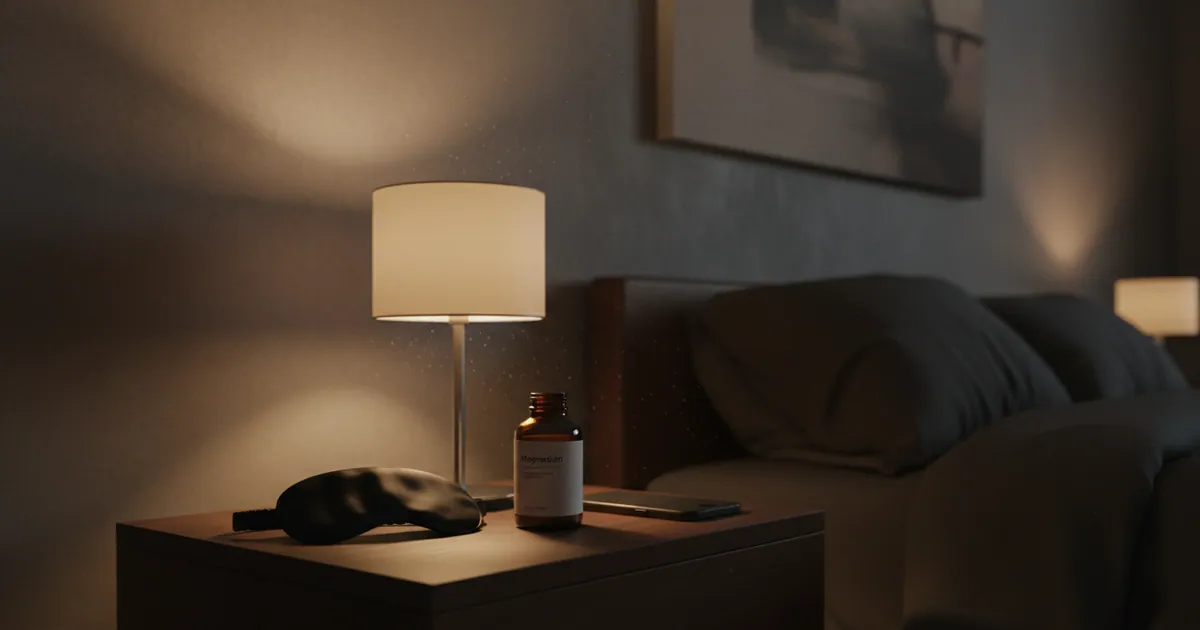
Magnesium glycinate (300–400mg before bed) is one of the most evidence-backed sleep support supplements. It relaxes muscles, supports the nervous system, and improves sleep quality without causing morning grogginess.
Stress and winding down
Mental alertness and worry delay sleep onset. A 15–20 minute wind-down routine — reading, stretching, breathing exercises — cues the nervous system to downregulate. Avoid intense work or training in the final 1–2 hours before bed.
Sleep and Alcohol
Even moderate alcohol (1–2 drinks) significantly disrupts sleep architecture, particularly REM sleep. You may fall asleep faster after alcohol, but sleep quality is measurably worse. On a cut where sleep quality directly impacts fat loss and muscle retention, frequent alcohol is a significant self-imposed handicap.
Warning
Don't sacrifice sleep for extra cardio. An additional 30 minutes of cardio burns roughly 200–250 calories. One night of poor sleep (6h vs. 8h) can increase next-day calorie intake by 200–500 calories and impair fat-burning hormones for 24+ hours. The maths strongly favours sleep.
Pre-Workout Powder
Caffeine + citrulline + beta-alanine. Makes a noticeable difference on low-energy days.
Affiliate link. See our disclosure.

Affiliate partner
Sleep deeper, recover harder — APMZEE
Premium UK supplements — 4 pillars: Action, Performance, Movement, Sleep
Key Takeaways
- Poor sleep directly impairs fat loss through hunger hormone dysregulation, elevated cortisol, and reduced anabolic hormones
- Aim for 7–9 hours, targeting the higher end during a cut
- Consistent sleep timing is the single most impactful sleep habit
- Caffeine cutoff, room temperature, and light management are the three most practical variables to optimise
- Magnesium glycinate is a well-evidenced sleep support supplement
Newsletter
Cut smarter, every Sunday
One deep-dive guide, one recipe, one tip. No spam. No bro-science. Unsubscribe anytime.
More like this
Related guides
Recovery
Stress and Cortisol: How Chronic Stress Sabotages Your Cut
6 min read
Recovery
Foam Rolling Guide: Does It Actually Help Recovery?
5 min read

Recovery
Home Workout Progression System — Level Up Every 30 Days
5 min read
Recovery
Sauna Benefits: What the Evidence Says for Recovery and Fat Loss
5 min read