Supplement Guides
BCAAs: Are They a Waste of Money?
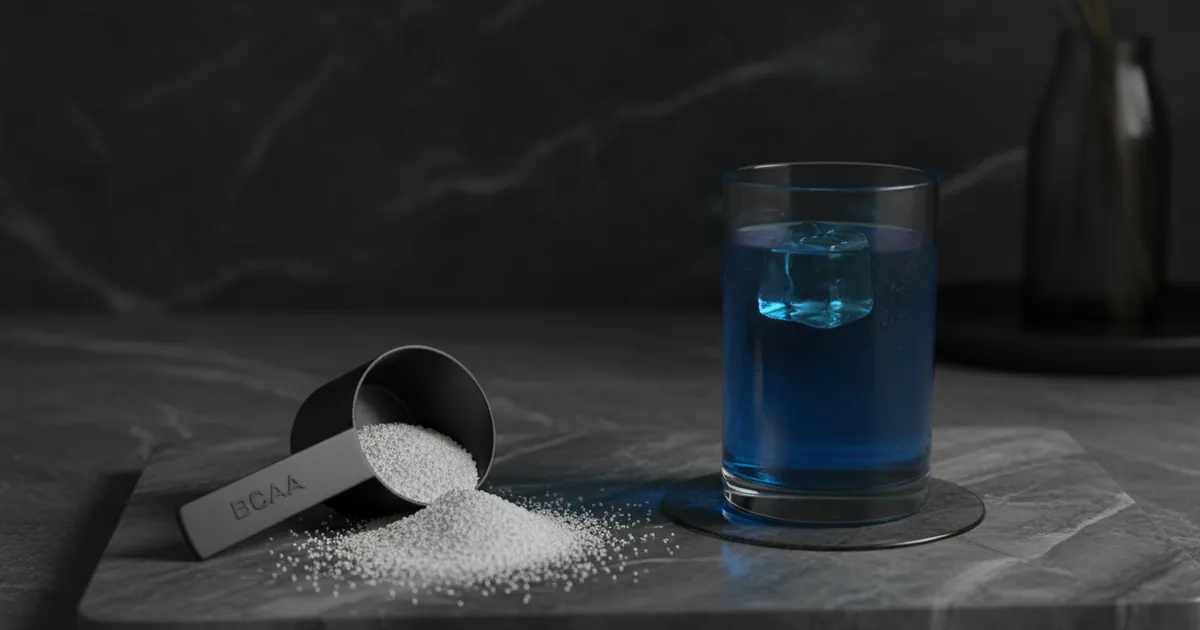
BCAAs (branched-chain amino acids — leucine, isoleucine, and valine) are one of the biggest-selling supplement categories in fitness. They're widely marketed as essential for muscle preservation during a cut. The reality is that for most people eating adequate protein, they're almost entirely redundant.
What BCAAs Are
BCAAs are three of the nine essential amino acids your body can't synthesise on its own and must obtain from food. Leucine in particular is considered the primary trigger for muscle protein synthesis (MPS) — the process of building new muscle tissue.
The BCAA supplement pitch is this: taking BCAAs between meals or during fasted training spikes leucine levels, which triggers MPS and prevents muscle breakdown.
This sounds compelling. But there are some critical flaws in this logic.
Why the Pitch Doesn't Hold Up
You get BCAAs from protein. Any complete protein source — whey, chicken, eggs, Greek yogurt, beef — contains BCAAs, including leucine, at quantities sufficient to trigger MPS. If you're hitting your daily protein targets (1.6–2.2g/kg), you're already consuming adequate BCAAs multiple times per day.
Isolated BCAAs don't trigger MPS as effectively as whole protein. Studies comparing BCAA supplementation to whey protein consistently find that whey (which contains BCAAs plus all other essential amino acids) produces superior MPS responses. BCAAs alone produce an incomplete response because MPS requires all essential amino acids, not just three.
The fasted training argument is weak. The idea that you need BCAAs to protect muscle during fasted training has been tested. Research shows that provided total daily protein is adequate, fasted resistance training does not meaningfully increase muscle catabolism vs. fed training. The post-workout period matters far more than the pre-workout state.
TL;DR
If you're eating 1.6g+ of protein per kg of bodyweight per day from quality sources, BCAAs will add nothing to your results. That money is better spent on more protein-rich food.
When BCAAs Might Have Value
Genuinely low protein intake: If for some reason you cannot eat adequate protein (medical dietary restrictions, very low-calorie crash dieting), supplemental leucine or EAAs (essential amino acids — a better version of BCAAs) might provide some benefit.
Vegan diets with lower-leucine protein sources: Plant proteins tend to be lower in leucine than animal proteins. A leucine supplement or BCAA supplement might support MPS for vegans who rely heavily on lower-leucine sources like hemp or soy.
EAAs vs. BCAAs: If you're going to supplement amino acids, essential amino acids (EAAs) are superior to BCAAs. They contain all nine essential amino acids and produce a better MPS response. At similar price points, EAAs are the better choice.
Pro Tip
If you like the flavoured BCAA drinks for hydration during training, that's fine — just don't buy them expecting a performance or body composition benefit. You're paying for flavoured water with a marketing story.
The Marketing Machine
BCAA supplements carry extremely high profit margins. The raw material is cheap; the branding, flavouring, and marketing are where the money goes. They're heavily promoted by influencers and featured prominently in supplement brand product lines.
The honest truth: a chicken breast or a scoop of whey protein costs less than BCAAs and delivers far more of what you actually need.
What to Buy Instead
If you're supplementing amino acids, consider:
- Whey protein — complete protein, full amino acid spectrum, proven MPS trigger
- EAAs — better than BCAAs if you specifically want an amino acid supplement (useful during fasted training if that matters to you)
- More whole food protein — chicken, eggs, Greek yogurt, cottage cheese, tuna are all cheaper per gram of protein than BCAAs
Myprotein Impact Whey
The UK's best-selling protein powder. 21g protein per scoop, under 50p per serving on sale.
Affiliate link. See our disclosure.
Key Takeaways
- BCAAs are largely redundant if daily protein intake is adequate (1.6g+ per kg)
- Whole protein sources trigger MPS more effectively than isolated BCAAs
- If you want an amino acid supplement, EAAs are superior to BCAAs
- The fasted training argument for BCAAs doesn't hold up when total daily protein is adequate
- The money spent on BCAAs is better used on quality protein sources
Newsletter
Cut smarter, every Sunday
One deep-dive guide, one recipe, one tip. No spam. No bro-science. Unsubscribe anytime.
More like this
Related guides

Supplement Guides
The Complete Supplement Stack for Cutting
6 min read
Supplement Guides
Creatine During a Cut: Should You Keep Taking It?
6 min read

Supplement Guides
The Truth About Fat Burners: Do They Actually Work?
6 min read

Supplement Guides
Pre-Workout Guide: What Works, What Doesn't, and How to Use It Safely
7 min read