Supplement Guides
Greens Powder Guide: Are They Worth the Price?
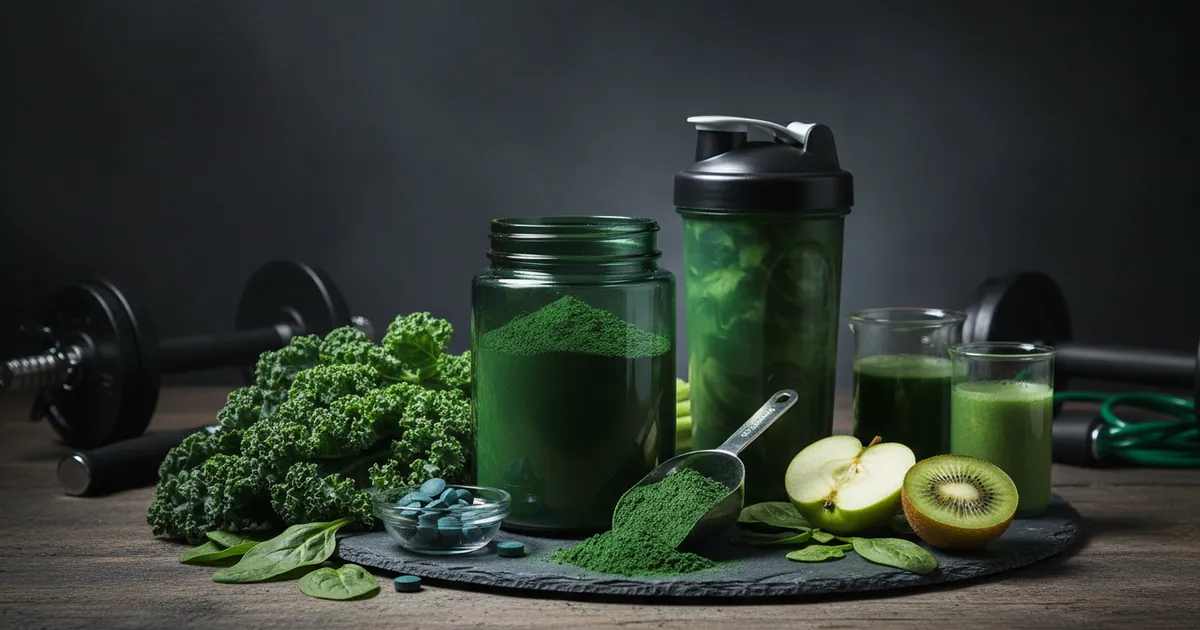
Greens powders have moved from niche health stores to mainstream gym culture, and the price tags have moved north with them. Brands like AG1 (formerly Athletic Greens) charge £80–100+ per month and promise comprehensive nutritional support. Others charge £20–30. Are any of them worth it?
What's in a Greens Powder?
Most greens powders contain some combination of:
- Dried/powdered vegetables and fruits (spinach, broccoli, wheatgrass, spirulina, chlorella)
- Probiotic strains (for digestive health)
- Digestive enzymes
- Adaptogenic herbs (ashwagandha, rhodiola, etc.)
- Vitamin and mineral blend (often a basic multivitamin equivalent)
- Antioxidant compounds (polyphenols, resveratrol)
The theory is sound: vegetables are good for you, and many people don't eat enough of them. Concentrate them into a powder, add some extras, and you've got a convenient health boost.
The reality is more complicated.
The Evidence Problem
The research on greens powders as complete products is surprisingly thin. Most studies are:
- Funded by the manufacturers
- Short-duration
- Using biomarker outcomes (antioxidant capacity, certain nutrient levels) rather than hard health outcomes
Independent research on specific ingredients within greens powders (spirulina, chlorella, certain probiotics) does show benefits. But whether these translate to meaningful outcomes from a daily scoop of powder is not well-established.
Can They Replace Vegetables?
No. The processing required to turn vegetables into a shelf-stable powder degrades many of the beneficial compounds that make vegetables valuable — particularly certain phytonutrients, fibre, and water-soluble vitamins. A serving of real spinach is categorically not equivalent to a scoop of powdered spinach.
Fibre in particular is lost or significantly reduced in most greens powders. Fibre from whole vegetables is essential for gut health, satiety (important during a cut), and blood sugar regulation.
Warning
Don't use a greens powder to offset a poor vegetable intake. They're a supplement, not a substitute. If your diet is light on vegetables, the best solution is more vegetables — frozen is fine and far cheaper.
When Greens Powders Might Be Useful
Travel or busy periods: When eating well consistently is genuinely difficult, a greens powder provides a reasonable nutritional safety net.
Very restricted diets: If food variety is limited for any reason, greens powders help fill micronutrient gaps.
On top of a good diet: If you're already eating well (5+ portions of vegetables/fruit daily), a greens powder might provide marginal additional benefit from the adaptogen and probiotic components.
Value Assessment
At £30–40/month (mid-range products), you're in sensible territory if you find it genuinely useful and eat well otherwise. At £80–100+/month (AG1 territory), you could buy:
- A comprehensive multivitamin (£5/month)
- Magnesium glycinate (£8/month)
- Vitamin D3/K2 (£5/month)
- A kilo bag of frozen spinach/broccoli each week (£12/month)
...and be nutritionally better served for roughly a third of the price.
Pro Tip
Frozen vegetables are nutritionally equivalent to fresh (often better, as they're frozen at peak ripeness) and cost a fraction of greens powders. A bag of frozen spinach mixed into a protein shake achieves something similar to a greens powder without the premium price tag.
Myprotein Impact Whey
The UK's best-selling protein powder. 21g protein per scoop, under 50p per serving on sale.
Affiliate link. See our disclosure.
Key Takeaways
- Greens powders cannot replace vegetables — processing reduces key nutrients and removes fibre
- The evidence base for whole-product benefits is thin and often industry-funded
- Mid-range products may be useful during busy periods or as a backup, not as a daily replacement for a good diet
- Premium-priced greens powders offer poor value compared to a basic multivitamin and real food
- If vegetable intake is low, add frozen vegetables first — they're cheaper and more effective
Newsletter
Cut smarter, every Sunday
One deep-dive guide, one recipe, one tip. No spam. No bro-science. Unsubscribe anytime.
More like this
Related guides

Supplement Guides
Caffeine and Performance: How to Use It Properly
6 min read
Supplement Guides
Creatine During a Cut: Should You Keep Taking It?
6 min read
Supplement Guides
Best Supplements for Cutting: Ranked and Reviewed
8 min read
Supplement Guides
The Truth About Fat Burners: Do They Actually Work?
6 min read