Training
Rest Periods for Hypertrophy: How Long Should You Actually Rest?
Rest periods are one of the most overlooked variables in training. Most people either rest too long (chatting, scrolling, wandering off) or not long enough (rushing through sets chasing a "pump"). Neither extreme is optimal for muscle growth.
What Does the Research Say?
For several years, the conventional wisdom was that shorter rest periods (60–90 seconds) created more metabolic stress and therefore more hypertrophy. More recent research has largely overturned this.
A landmark 2016 study by Schoenfeld et al. found that trainees resting 3 minutes between sets gained significantly more muscle and strength than those resting 1 minute — despite matched total volume. The reason: longer rest allows greater performance in subsequent sets, meaning you're actually doing more quality work.
The current consensus for hypertrophy:
- Compound lifts (squat, deadlift, bench, row): 2–3 minutes
- Isolation exercises (curls, raises, extensions): 60–90 seconds
- Heavy strength work (5 reps and under): 3–5 minutes
Why Rest Matters More on a Cut
When you're in a calorie deficit, your body's ability to recover between sets is reduced. ATP replenishment slows slightly, and central fatigue accumulates faster. This means the temptation to feel like you're "wasting time" by resting longer should be resisted.
cutting rest periods to speed up a session sounds efficient but typically results in:
- Lower weights used across the session
- More reps lost on later sets
- Reduced total volume
- Poorer stimulus for the muscle
Pro Tip
If you're short on time, prioritise your compound lifts with full rest periods and reduce rest on isolation work. The big movements drive the most muscle-retention signal — don't compromise them.
Rest Periods and Metabolic Stress
Short rest periods do create more metabolic stress, cellular swelling, and the "pump" associated with hypertrophy. This is a real stimulus — it's just not as powerful as mechanical tension (heavier load, progressive overload). So while there's a role for shorter rest in isolation work and higher-rep finishers, it shouldn't be your primary strategy.
If you enjoy the pump and find shorter rest periods motivating, use them selectively — last exercises of a session, or when you're actively using techniques like supersets and drop sets.
Practical Templates
Compound-focused session (limited time):
- Squat / Deadlift / Press: 2.5–3 min rest
- Accessory compounds (Romanian deadlift, incline press): 2 min rest
- Isolation finishers: 60 sec rest, can superset
Hypertrophy-focused session (more time available):
- All compound work: 2–3 min
- Isolation work: 90 sec – 2 min
- Pump work / supersets: 45–60 sec
Tracking Your Rest
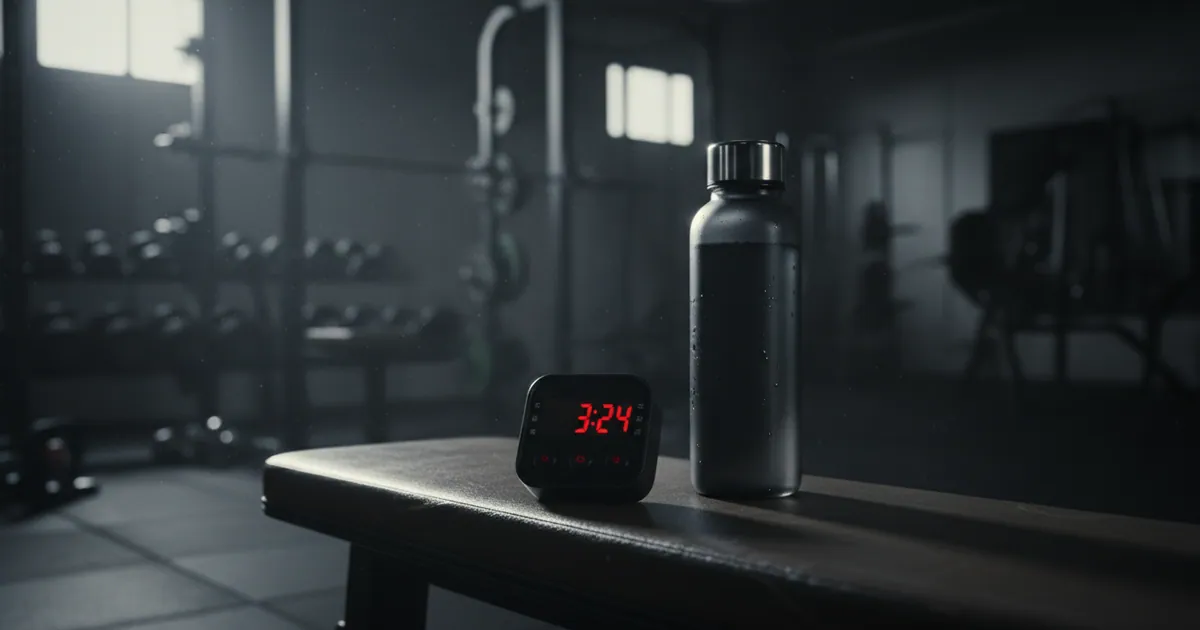
You don't need a dedicated timer if that feels excessive. A phone stopwatch or smartwatch works fine. What matters is that you're roughly consistent — drifting to 5-minute rests between sets because your phone is interesting is eating into your session without benefit.
Warning
Don't confuse cardiovascular breathlessness with muscular recovery. You may feel ready before your muscles are fully recovered. If your reps drop sharply on the next set, your rest was too short.
Myprotein Impact Whey
The UK's best-selling protein powder. 21g protein per scoop, under 50p per serving on sale.
Affiliate link. See our disclosure.
Key Takeaways
- Longer rest periods (2–3 min for compounds) produce better hypertrophy than the old 60-second myth
- On a cut, reduced recovery capacity makes adequate rest even more important
- Short rest has a role in isolation work and pump-focused finishers but shouldn't dominate
- If time is limited, protect rest periods on compound lifts and shorten rest on isolation work
- Consistent rest periods make your progress tracking more reliable
Newsletter
Cut smarter, every Sunday
One deep-dive guide, one recipe, one tip. No spam. No bro-science. Unsubscribe anytime.
More like this