Beginner
Understanding Food Labels UK: How to Read Nutrition Information
UK food labels contain the information you need to make good dietary choices — if you know how to read them. They also contain a fair amount of marketing designed to obscure things. This guide covers what's actually useful and what to ignore.
The Nutrition Information Panel
All packaged foods in the UK must include a nutrition information table showing values per 100g and (usually) per serving.
Always check per 100g, not per serving. Serving sizes are set by the manufacturer and are often unrealistically small. "Per serving" data can be misleading if you eat more than that serving.
What Each Number Means
Energy (kcal): Calories. The most directly relevant number for tracking a cut. Note: the "kJ" figure alongside it is kilojoules (a different unit of energy used in science). You can ignore kJ.
Fat (and of which saturates): Total fat in grams. The "saturates" breakdown shows saturated fat. Both figures are per 100g. For tracking purposes, total fat is what matters.
Carbohydrate (and of which sugars): Total carbohydrate. The "sugars" figure is the breakdown of simple sugars within total carbs. Don't fixate on the sugars figure — what matters for body composition is total carbohydrate, not the sugar split.
Fibre: Dietary fibre. Aim for 25–35g per day. UK labels include fibre as a separate line from carbohydrates (unlike some US labels where it's included within carbs).
Protein: Grams of protein per 100g. The figure you'll look at most during a cut.
Salt: Sodium expressed as salt equivalent. Important context for water retention and health.
Pro Tip
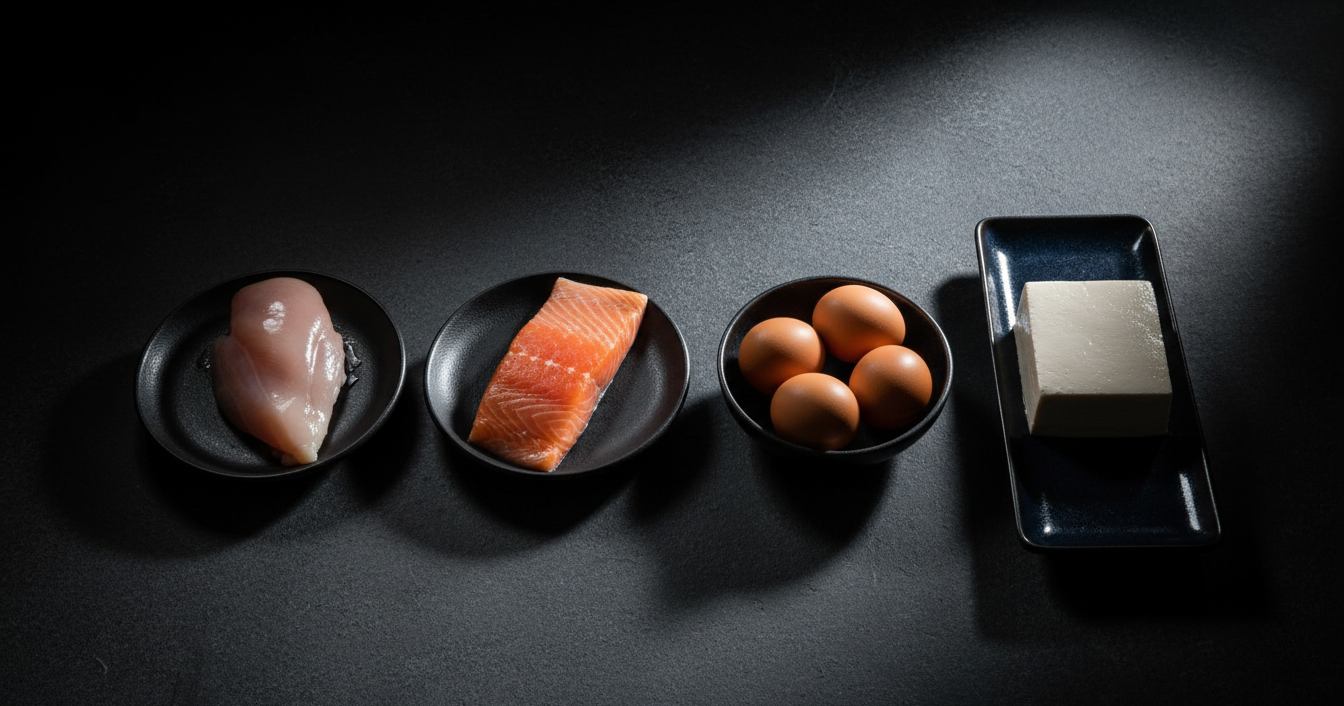
When comparing protein sources in a supermarket, just check the protein per 100g. Anything above 15g/100g is genuinely high protein. Above 20g/100g is excellent.
The Traffic Light System
Many UK products display a front-of-pack traffic light system (though it's voluntary, not mandatory). This uses red/amber/green colour coding for fat, saturated fat, sugars, and salt based on per-serving amounts.
For a cut, the traffic light system has limited usefulness:
- A "red" fat label doesn't mean a food is bad — salmon and eggs are high-fat but nutritionally excellent
- A "green" sugar label doesn't mean the food is low-calorie
- The system was designed for general health guidance, not body composition
Use it as a rough orientation tool only. The full nutrition table gives you the actual data you need.
Common Label Claims and What They Mean
"High Protein"
Under UK law (carried over from EU regulation), a food can claim "high protein" if protein provides at least 20% of the product's energy. This can still mean a relatively low absolute amount — always check the actual grams per serving.
"Low Fat"
Must contain no more than 3g fat per 100g. Helpful signal, but doesn't tell you about calories or protein.
"Light" or "Lite"
Regulated: must be 30% lower in energy, fat, or sugar than the standard product. Which of the three has been reduced isn't always clear.
"No Added Sugar"
Means no sugar has been added during manufacture. The product can still contain naturally occurring sugars (from fruit, dairy, etc.) and can still be calorie-dense.
"Natural"
Not regulated. This word means essentially nothing on UK food labels.
"Wholegrain"
The product contains whole grain ingredients. Good signal for fibre content, but doesn't tell you how much whole grain is in the product.
Ingredient Lists
Ingredients are listed in descending order by weight (the most abundant ingredient first). A few things to watch for:
Position of sugar: If sugar, glucose syrup, fructose, or similar appear in the first three ingredients, the product is high in added sugar.
Protein spiking indicators: In protein supplements, watch for amino acids like glycine, taurine, and creatine appearing early in the ingredient list. These can artificially inflate the nitrogen content used to calculate protein in lab testing.
Hydrogenated oils: A source of trans fats. Rare in UK products now (largely regulated out), but worth avoiding.
Portion Size Reality
As noted, serving sizes are manufacturer-defined. Real-world examples where serving size claims require caution:
- "Serving size: 30g" for cereal — most people pour 60–80g
- "Serving size: 1 biscuit" for Hobnobs — most people eat 3–4
- "Serving size: 2 tablespoons" for peanut butter — eyeballed portions are often 3–4x this
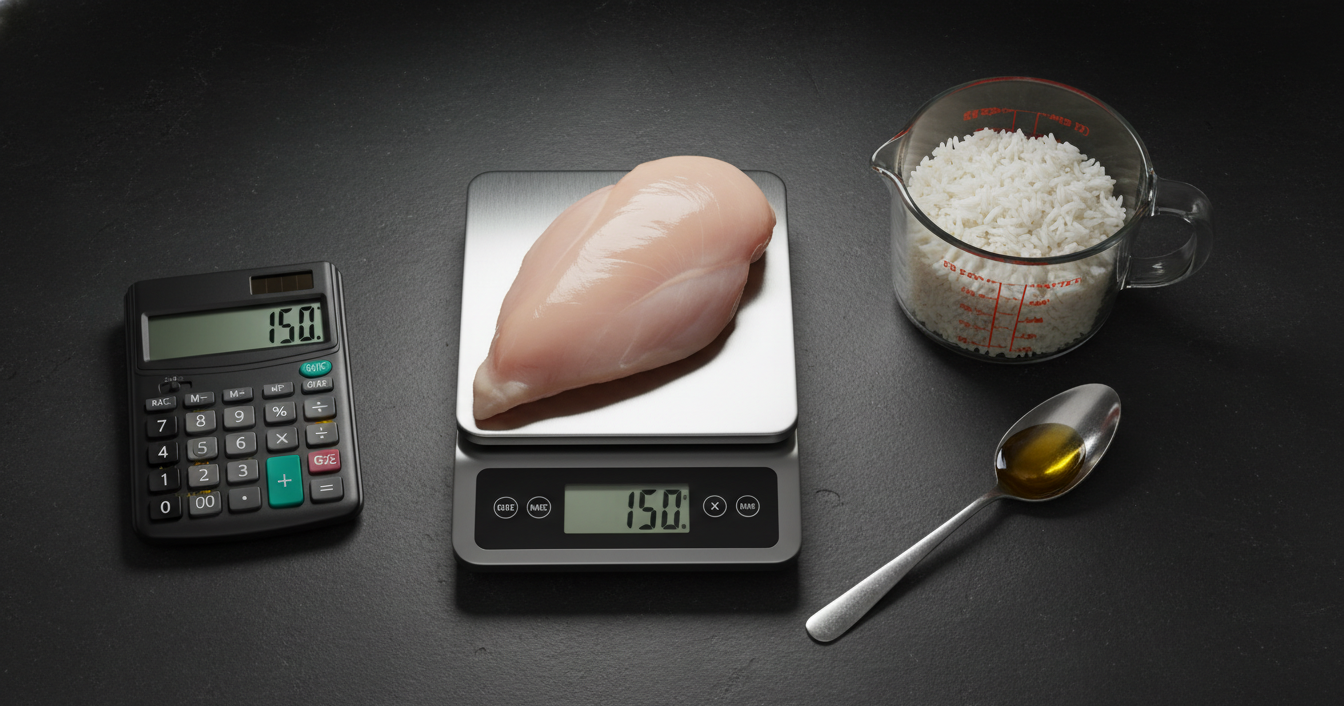
For accurate tracking, weigh your portion rather than trusting serving size as a guide.
Warning
Calorie counts on food labels have an allowed error margin of ±20% in the UK. For most foods, the actual calorie content is close to the label. For restaurant meals and takeaways (which display calorific information voluntarily), the variation can be much larger.
Creatine Monohydrate
The most researched supplement in existence. 5g daily, unflavoured, mixes into anything.
Affiliate link. See our disclosure.
Key Takeaways
- Always check per 100g figures, not per serving — serving sizes are manufacturer-defined and often unrealistically small
- Protein per 100g is the most important label figure during a cut
- Traffic light labels are rough guidance, not precise nutritional analysis
- "Natural," "lite," "high protein," and similar claims are regulated with specific but sometimes misleading definitions
- Weigh portions rather than using serving size as an eating guide
Newsletter
Cut smarter, every Sunday
One deep-dive guide, one recipe, one tip. No spam. No bro-science. Unsubscribe anytime.
More like this