Meal Prep
Budget Cutting: Under £30 Per Week
The idea that eating well during a cut requires expensive food is a myth. Some of the highest-protein, most nutrient-dense foods available in the UK are also the cheapest. This guide builds a realistic weekly plan around approximately £25–28 at an Aldi or Lidl, covering 5 days of meals at around 160g protein and a 400 kcal deficit.
The Budget Protein Hierarchy
Cost per 100g of protein (approximate UK prices, 2026):
| Source | Cost per 100g protein |
|---|---|
| Dried red lentils | £0.40–0.60 |
| Eggs (12 pack) | £0.50–0.70 |
| Frozen chicken thighs | £0.70–0.90 |
| Tinned tuna (in water) | £0.90–1.20 |
| Chicken breast (frozen bulk) | £1.00–1.30 |
| Greek yogurt (0% fat) | £1.10–1.40 |
| Frozen prawns | £1.20–1.60 |
Chicken breast, eggs, lentils, and tinned fish are the backbone of budget cutting. Expensive protein sources — smoked salmon, quality steak, branded protein products — are fine occasionally but shouldn't be your staples.
A Sample Weekly Shop (Under £30, Aldi/Lidl)
Proteins (~£14):
- 1kg frozen chicken breast: £4.50–5.50
- 12 eggs: £2.00–2.50
- 4 tins tuna in water: £2.50–3.00
- 500g 0% Greek yogurt: £1.50–2.00
- 500g red lentils (dry): £1.00–1.50
Carbs (~£5):
- 1kg basmati rice: £1.00–1.50
- 1kg oats: £0.80–1.20
- 1.5kg sweet potatoes: £1.50–2.00
- 1 wholegrain loaf: £0.80–1.20
Vegetables and fruit (~£7):
- 750g broccoli florets: £1.00–1.50
- 400g frozen spinach: £0.80–1.20
- 1kg frozen mixed vegetables: £1.00–1.50
- 400g cherry tomatoes: £0.90–1.20
- Frozen berries (500g): £1.20–1.80
- 6 bananas: £0.80–1.20
Total estimate: £24–27
Pro Tip
Frozen vegetables are nutritionally equal to fresh and often superior — they're frozen at peak ripeness, retaining vitamins that degrade in fresh produce stored for days. Frozen spinach, broccoli, peas, and mixed veg are cost-effective staples that don't expire mid-week.
Making It Work: A Day's Meals on This Budget
Breakfast: Oats (80g) with Greek yogurt (150g) and frozen berries (100g) — approximately 38g protein, 450 kcal
Lunch: Tuna (1 tin, drained) with rice (150g cooked) and mixed veg (200g) — approximately 35g protein, 420 kcal
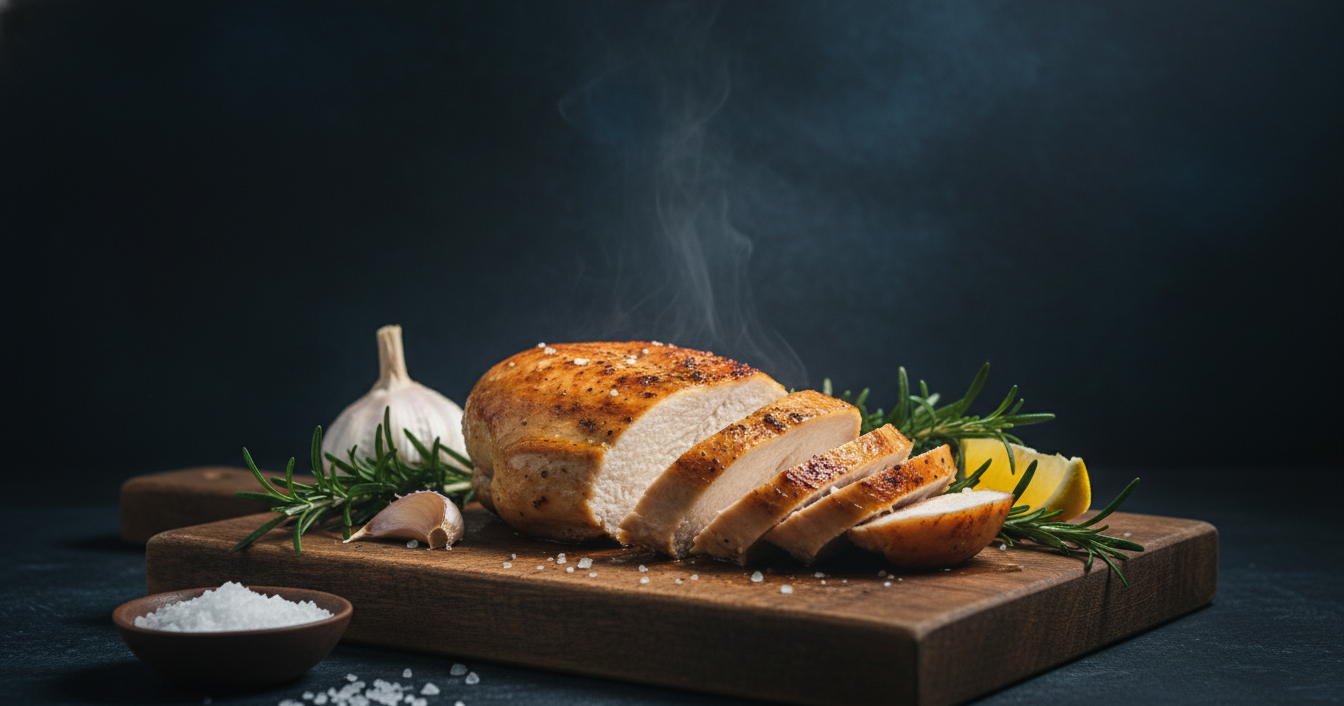
Dinner: Chicken breast (180g) with sweet potato (200g) and broccoli (200g) — approximately 45g protein, 450 kcal
Snacks: 2 boiled eggs + a banana — approximately 14g protein, 230 kcal
Daily totals: ~132g protein, ~1,550 kcal. Scale portions up to hit your specific target.
Reducing Costs Further
Buy frozen over fresh for most proteins. Frozen chicken breast is typically 30–40% cheaper than fresh equivalent and nutritionally identical. Thaw in the fridge overnight.
Use lentils as a protein extender. Adding 100g (dry) of red lentils to a mince-based dish adds 26g protein and costs approximately £0.15. Stretch your expensive protein further.
Eggs are the most cost-effective complete protein source available. At approximately £0.20–0.25 per egg with 6g of high-quality protein each, few foods compete on price per gram.
Buy own-brand. Tesco value oats vs Quaker: same nutritional profile, 3x price difference. The same comparison applies to almost every staple.
Warning
Micronutrient gaps become more likely on a very tight budget. Prioritise variety in your vegetable choices — rotating between different types ensures broader micronutrient coverage than eating the same two vegetables repeatedly. Frozen mixed vegetable bags are the budget solution.
Greens Powder
Quick micronutrient insurance for days when vegetable intake is low.
Affiliate link. See our disclosure.
Key Takeaways
- A high-protein cutting diet in the UK is achievable under £28–30/week at Aldi or Lidl
- Eggs, frozen chicken, tinned tuna, Greek yogurt, and lentils are the best-value protein sources
- Frozen vegetables are nutritionally equivalent to fresh — use them as your staple
- Lentils as a protein extender can significantly reduce meal costs without compromising protein intake
- Own-brand staples (oats, rice, tinned fish) are nutritionally identical to branded at 30–50% lower cost
- Rotate vegetable varieties to ensure adequate micronutrient coverage on a limited budget
Newsletter
Cut smarter, every Sunday
One deep-dive guide, one recipe, one tip. No spam. No bro-science. Unsubscribe anytime.
More like this