Nutrition Science
Intuitive Eating vs Tracking
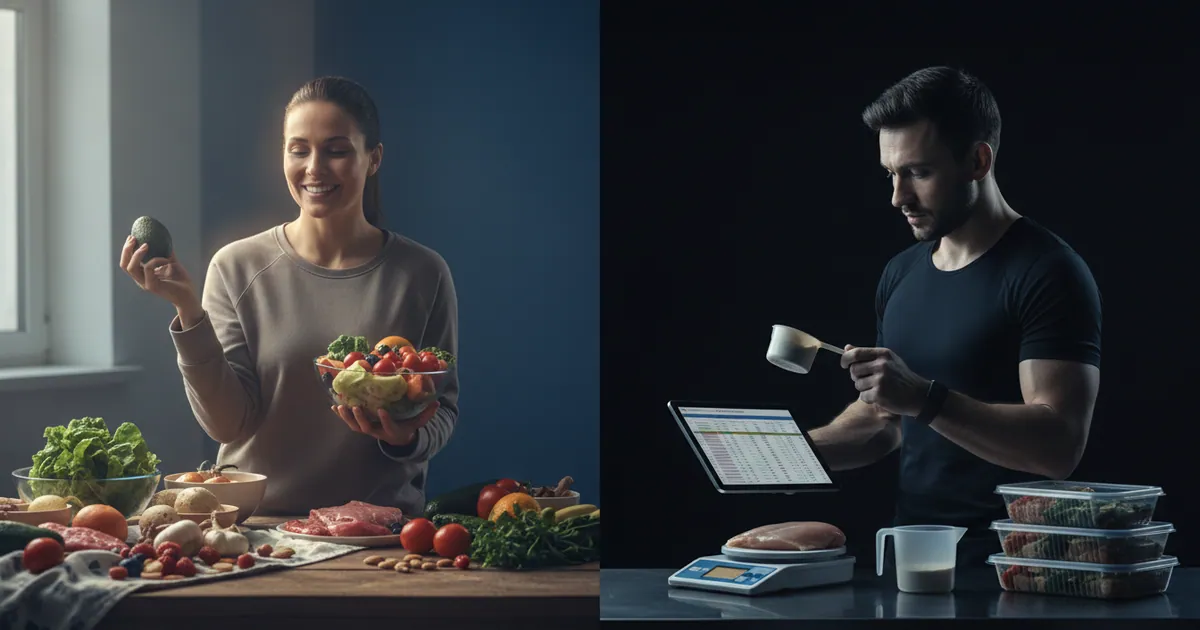
The debate between tracking and intuitive eating is often framed as all-or-nothing. The reality is more nuanced: both approaches have evidence behind them, both have significant limitations, and many people benefit from a hybrid. Understanding what each actually does helps you choose what fits your situation.
What Is Intuitive Eating?
Intuitive eating is an approach developed by dietitians Evelyn Tribole and Elyse Resch that encourages eating in response to internal hunger and satiety signals rather than external dietary rules. In its original therapeutic context, it's designed to address disordered eating and improve the psychological relationship with food.
It has been misappropriated in online fitness culture to mean simply "not tracking" — which isn't the same thing. True intuitive eating involves developing genuine attunement to hunger, fullness, and body signals — a skill that takes time to build.
The Case for Tracking
For body composition goals specifically, tracking macros has a stronger evidence base than intuitive approaches. The reason is straightforward: most people's intuition about how much they're eating is inaccurate. Research consistently shows that individuals — including trained dietitians and nutrition professionals — underestimate calorie intake by 20–40%.
If you're not accurately perceiving your intake, acting on intuition means acting on inaccurate information. A moderate calorie deficit requires precision that intuition alone struggles to deliver consistently.
Benefits of tracking:
- Accuracy: you know approximately what you're eating
- Accountability: logging creates friction before eating thoughtlessly
- Learning: you build genuine knowledge of food composition over time
- Flexibility: you can adjust specific macros when needed
Pro Tip
Tracking is a skill that improves over time. The first 2–3 weeks feel laborious and frustrating. After 4–6 weeks, most people find it takes 5–10 minutes per day. After 3–4 months, many people develop accurate intuition and can reduce tracking significantly.
The Case for Intuitive Eating
Tracking has real psychological costs for some people. A 2020 review found that dietary tracking was associated with anxiety, stress, and in a minority of cases, disordered eating patterns — particularly in those with a history of restrictive eating.
For someone who finds tracking increases anxiety, obsessive thoughts about food, or disrupts a healthy relationship with eating, intuitive eating — even with imperfect accuracy — may produce better outcomes through better psychological health and sustainability.
Benefits of intuitive eating:
- Lower psychological burden
- More adaptable to social situations, travel, and irregular schedules
- Builds long-term independence from tracking tools
- Associated with better eating disorder recovery outcomes
Warning
Intuitive eating and "eating what you feel like" are not the same thing. Genuine intuitive eating requires eating slowly, paying attention to hunger and fullness signals, and stopping when satisfied — not when the plate is empty or when a social situation ends. This takes practice and conscious effort.
The Hybrid Approach
For most people pursuing body composition goals, the most effective long-term approach is:
- Start with tracking for 8–16 weeks to build accurate dietary knowledge
- Transition to partial tracking — logging protein and total calories but not every macro
- Move to intuitive eating once you have reliable mental models of your typical eating patterns
This progression gives you the accuracy needed to make real progress while building toward greater dietary autonomy.
Who Should Use Which Approach?
Track if:
- You're new to managing your diet intentionally
- You've been eating for a while without results and aren't sure why
- You have a specific body composition goal with a clear timeline
- You have a reasonably healthy relationship with food
Use intuitive/partial approach if:
- You have a history of restrictive or disordered eating
- Tracking significantly increases food anxiety for you
- You've been tracking successfully for over a year and have good dietary intuition
- Your goal is maintenance rather than active fat loss
Myprotein Impact Whey
The UK's best-selling protein powder. 21g protein per scoop, under 50p per serving on sale.
Affiliate link. See our disclosure.
Key Takeaways
- Macro tracking has stronger evidence for body composition accuracy than intuitive eating
- People consistently underestimate calorie intake — intuition is often inaccurate without training
- Tracking carries psychological costs for some people; intuitive eating may be superior for them
- A hybrid approach (track to learn, then move toward intuitive) suits most people long-term
- True intuitive eating is an active skill involving attention to hunger signals — not just not tracking
Newsletter
Cut smarter, every Sunday
One deep-dive guide, one recipe, one tip. No spam. No bro-science. Unsubscribe anytime.
More like this