Supplement Guides
Best Supplements for Cutting: Ranked and Reviewed
The supplement industry loves a cut. Fat burners, "thermogenics," metabolism boosters, appetite suppressants — the marketing is relentless and the price tags are wild. Most of it is noise. This guide cuts through it and ranks what's actually worth your money.
TL;DR
S-Tier: Genuinely Useful
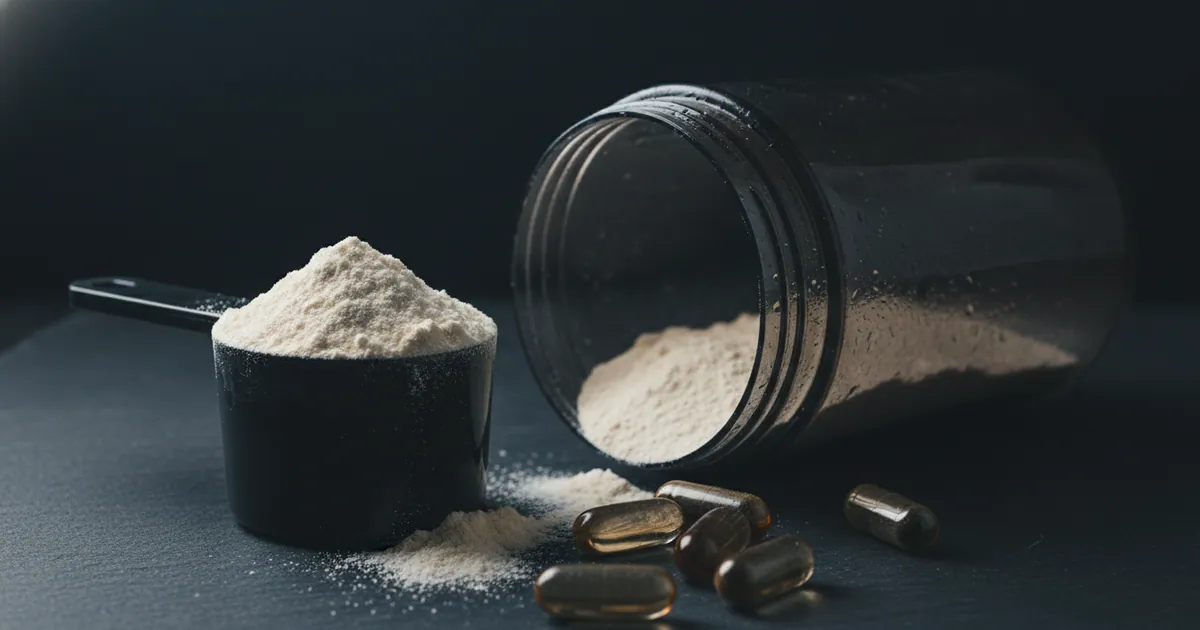
Protein Powder
Not a miracle supplement — it's just food in convenient form. But if you struggle to hit your protein targets from whole foods (which is harder on a cut), a quality whey or plant protein makes the difference. Protein is the most important dietary factor for muscle retention during a deficit.
Who needs it: Anyone struggling to consistently hit 1.6–2.2g protein per kg of bodyweight from food alone.
Creatine Monohydrate
One of the most studied supplements in existence, and it genuinely works. Creatine supports ATP resynthesis, which means better performance in your strength sets. During a cut, this helps you maintain training intensity — which is what preserves muscle.
It also causes a small amount of water retention (1–2kg), which means your scale weight won't drop as fast. Don't be fooled — this is muscle-sparing, not fat gain.
Dose: 3–5g per day, no loading required.
Caffeine
Free or cheap in the form of coffee or tea, and supported by extensive research. Caffeine improves performance, increases fat oxidation during exercise, and suppresses appetite in the short term. It does all of this with minimal downsides for most people.
Dose: 100–300mg pre-training. Avoid after 2–3pm to protect sleep.
A-Tier: Worth Considering
Vitamin D3 + K2
Deficiency is extremely common in the UK given the climate. Low vitamin D is associated with reduced testosterone, poor mood, and suboptimal recovery — all of which matter during a cut. A combined D3/K2 supplement is inexpensive and likely beneficial for most people.
Omega-3 Fish Oil
Anti-inflammatory, supports joint health, and some evidence suggests it helps preserve muscle protein synthesis in a deficit. Not a game-changer, but a sensible addition to a supplement stack at low cost.
Magnesium Glycinate
Many people are mildly deficient. Magnesium supports sleep quality and reduces muscle cramping. Both are relevant during a cut where sleep disruption is common.
B-Tier: Marginal but Harmless
Zinc
Another common deficiency. Supports testosterone levels and immune function. Cheap. If you don't eat a lot of red meat or shellfish, worth supplementing.
Electrolytes
If you sweat heavily or are eating low-carb, sodium/potassium/magnesium balance can slip. A simple electrolytes supplement prevents cramps and supports hydration. Not essential for everyone.
C-Tier: Mostly Hype
BCAAs
Redundant if you're hitting adequate total protein. Research shows no muscle retention benefit over simply eating enough protein. See the dedicated BCAA guide for the full breakdown.
CLA (Conjugated Linoleic Acid)
Modest fat loss effects in some studies, inconsistent in others. The effect size is too small to matter at practical doses.
HMB
Some evidence in specific populations (elderly, untrained). Minimal benefit for trained individuals in a deficit at normal doses.
D-Tier: Avoid
Fat Burners (proprietary blends)
Usually a mix of caffeine, green tea extract, and marketing. Buy caffeine separately for 1/20th the price and save yourself the money.
Raspberry Ketones, Garcinia Cambogia, etc.
Animal studies don't translate, human data is weak or non-existent, and the doses used in studies dwarf what's in most products.
Warning
Any supplement claiming "rapid fat loss" or "melt fat without dieting" is making a claim that cannot be substantiated. Genuine fat loss comes from a calorie deficit. Supplements can support performance and health — they can't replace the fundamentals.

Affiliate partner
APMZEE — premium UK alternative, 4 pillars
Premium UK supplements — 4 pillars: Action, Performance, Movement, Sleep
Myprotein Impact Whey
The UK's best-selling protein powder. 21g protein per scoop, under 50p per serving on sale.
Affiliate link. See our disclosure.
Key Takeaways
- Protein powder, creatine, and caffeine are the only supplements with meaningful evidence for cutting
- Vitamin D, omega-3, and magnesium support general health and recovery at low cost
- BCAAs are largely redundant if protein intake is adequate
- Fat burners are expensive caffeine with a marketing budget
- Spend money on food quality before supplements
Newsletter
Cut smarter, every Sunday
One deep-dive guide, one recipe, one tip. No spam. No bro-science. Unsubscribe anytime.
More like this