Beginner
The Complete Beginner's Guide to Cutting
If you've never done a structured cut before, starting can feel overwhelming. There's a huge amount of conflicting advice online, complicated protocols, and products promising shortcuts. This guide cuts through all of that. Here's exactly what you need to know to start a cut that actually works.
The general healthy-eating frame the NHS sets out in Managing your weight and the British Dietetic Association's healthy-eating Food Fact Sheet (BDA, September 2024) is the right backdrop for everything below. A cut isn't a new diet — it's the Eatwell-style balance with a measured calorie shortfall and protein nudged up.
TL;DR
A cut = eating slightly less than you burn. Protect protein (1.8–2.2g per kg). Keep training with weights. Walk more. Track what you eat. That's it. Everything else is detail.
What "Cutting" Actually Means
A cut is a period of deliberate fat loss. You eat less energy than you use (a calorie deficit), your body makes up the shortfall from stored fat, and you lose weight. The goal is to lose as much fat as possible while keeping as much muscle as possible.
The key variable that distinguishes a good cut from simply "eating less" is muscle retention. Anyone can lose weight quickly by starving themselves. The skill is losing fat without losing muscle — and that requires the right deficit, enough protein, and continued training.
Step 1: Calculate Your Starting Point
Before you start cutting, you need to know roughly how many calories you're currently eating to maintain your weight. This is called your Total Daily Energy Expenditure (TDEE).
Use our TDEE calculator to get your estimated maintenance calories. The number won't be perfectly accurate — everyone's metabolism is slightly different — but it gives you a starting point.
A moderate cutting deficit is 300–500 calories below your TDEE. This is the sweet spot where fat loss is consistent and muscle retention is good.
Example: TDEE of 2,500kcal → cut at 2,000–2,200kcal per day.
Step 2: Set Your Protein Target
Protein is the most important nutritional variable in a cut. It supports muscle retention, is the most satiating macronutrient, and has a high thermic effect (meaning more of the calories are used in digestion).
Target: 1.8–2.2g of protein per kg of bodyweight per day.
For an 80kg person, that's 144–176g of protein daily. Hit this target every day, without exception.
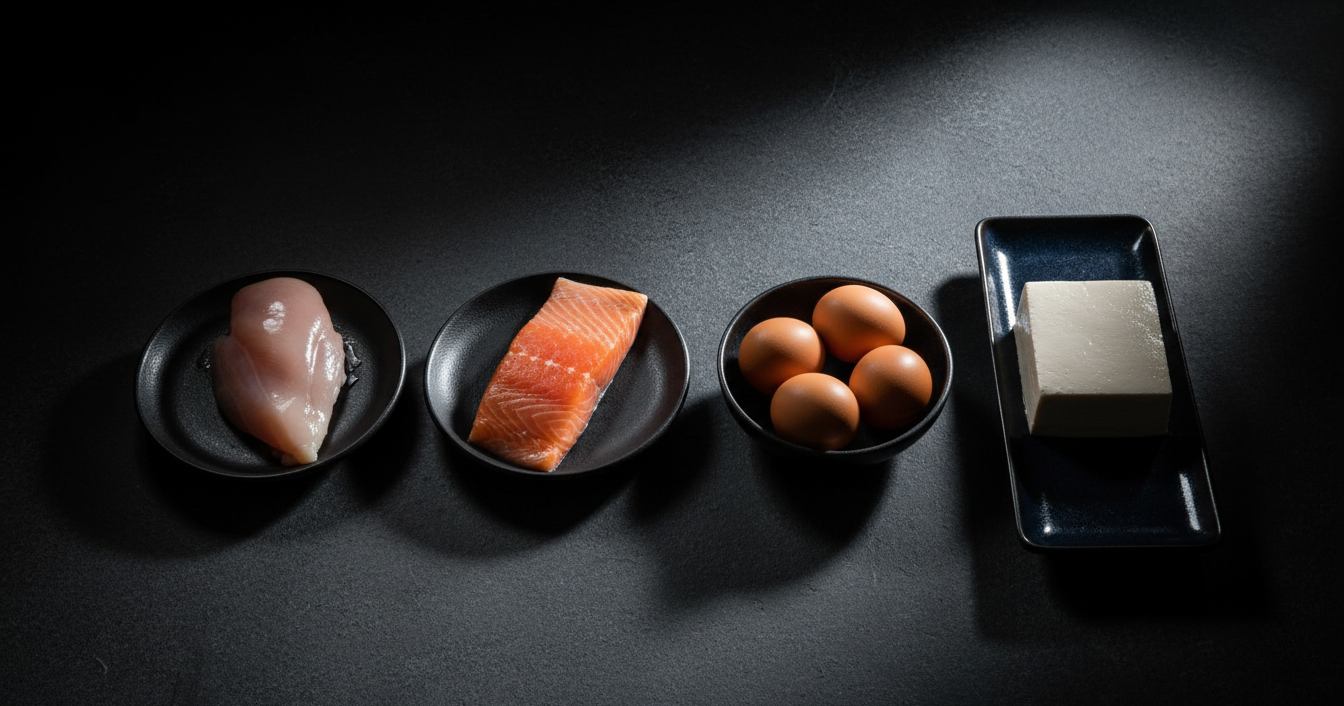
Good protein sources: Chicken breast, turkey mince, eggs, egg whites, Greek yogurt (0%), cottage cheese, tuna, salmon, lean beef, protein powder.
Step 3: Fill in Carbs and Fat
After protein, fill in your remaining calories with a mix of carbohydrates and fat. The exact split is personal preference — research shows similar fat loss results across different carb/fat ratios.
A practical starting point:
- Carbohydrates: 30–40% of remaining calories (fuel for training and brain)
- Fat: 20–30% of remaining calories (hormones, joint health, essential fatty acids)
Don't go very low fat (under ~40–50g/day) — essential fatty acids are required for hormone function, which matters especially when cutting.
Step 4: Start Tracking
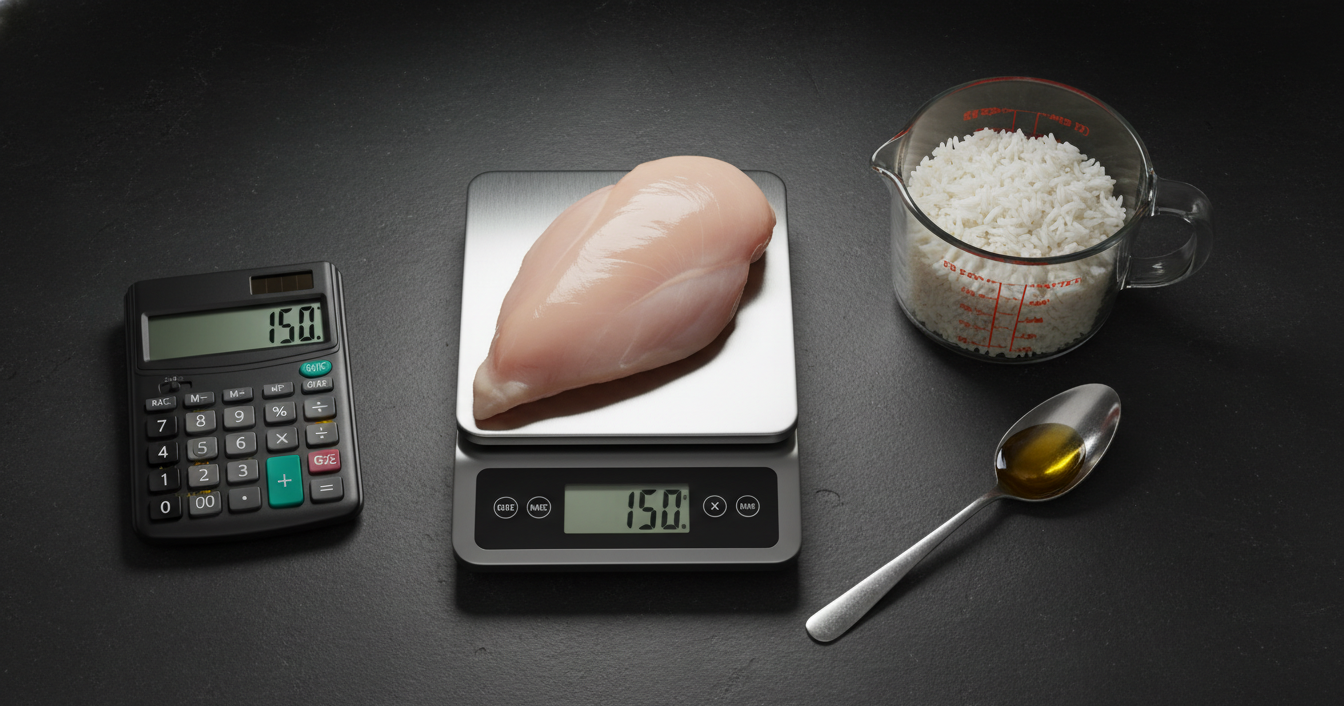
You cannot manage what you don't measure. Use MyFitnessPal or Cronometer to log your food. Weigh food with a kitchen scale — estimating portions without weighing is typically 20–40% inaccurate.
Track consistently for at least 4–6 weeks. After that, you'll have enough calibrated knowledge of portion sizes to be less rigid if you prefer.
Pro Tip
Log your food before you eat it where possible, not after. This helps you make adjustments before a mistake, rather than discovering at the end of the day that you went 500kcal over.
Step 5: Keep Training
This is the part most beginners under-prioritise. On a cut, resistance training is what sends the signal to keep muscle tissue. Without it, your body will lose fat and muscle in roughly equal proportions, leaving you lighter but not meaningfully more muscular.
Keep lifting. Keep the weights challenging. Don't switch to endless cardio. Aim for at least 3 resistance training sessions per week — the NHS Strength and Flex plan sets the floor at strengthening activity on at least two days a week for general adults, and a cut is exactly when you want to be above that floor, not at it.
Step 6: Add Walking
Walking is the most underrated fat loss tool. A daily walk of 30–45 minutes adds 2,000–4,000 steps and burns 100–200 extra calories without affecting training recovery or significantly increasing hunger. Over a 12-week cut, this adds up enormously.
Target at least 8,000–10,000 steps per day throughout your cut.
What to Expect
Week 1–2: You may lose 1–2kg of scale weight, much of which is water and glycogen. Don't extrapolate this rate.
Week 3–8: Genuine fat loss of 0.25–0.5kg per week. Scale weight will fluctuate day to day — this is normal.
Beyond that: Progress may slow as metabolic adaptation occurs. You may need to slightly reduce calories or increase activity. This is normal, not failure.
Common Beginner Mistakes to Avoid
- Cutting calories too drastically (aim for 300–500 deficit, not 1,000+)
- Neglecting protein
- Ditching the weights and doing only cardio
- Judging progress by daily scale weight instead of weekly averages
- Expecting linear progress
Myprotein Impact Whey
The UK's best-selling protein powder. 21g protein per scoop, under 50p per serving on sale.
Affiliate link. See our disclosure.
Key Takeaways
- A cut is a moderate calorie deficit (300–500kcal) with high protein (1.8–2.2g/kg) and continued resistance training
- Track food accurately — estimation without weighing is inaccurate
- Walking is a high-value, low-cost addition for additional calorie burn
- Expect 0.25–0.5kg of genuine fat loss per week after the initial water weight drop
- Muscle retention, not just weight loss, is the goal
Newsletter
Cut smarter, every Sunday
One deep-dive guide, one recipe, one tip. No spam. No bro-science. Unsubscribe anytime.
More like this